Category Archives: Social Networking
Be like the neighbors… then beat them…
Thanks to #BTV #VT ECHO‘s Molly Loomis for sharing this Washington Post article by David A. Fahrenthold…
To a psychologist, climate change looks as if it was designed to be ignored. It is a global problem, with no obvious villains and no one-step solutions, whose worst effects seem as if they’ll befall somebody else at some other time. In short, if someone set out to draw up a problem that people would not care about, one expert on human behavior said, it would look exactly like climate change…
One U.S. researcher thought television is to blame: All those TV ads have made Americans more focused on their own wants, she theorized, and less likely to care about the long-term good.
The obstacles to progress… there’s a sense that this is a problem for somebody else or some other time… the science can be confusing… humankind’s deep-seated love for the status quo and willingness to defend it… humans can fret about only so many things at once.
Psychological researchers say one possible way to overcome all these obstacles is to frame the changes needed to curb carbon emissions as “saving” the American way of life, instead of changing it. Another is to pair warnings about the climate with concrete suggestions about what to do, so people can act instead of just stewing in worry.
Another is to tap into two powerful human impulses: to be like one’s neighbors and then to beat them at something.
In one small study around San Diego in 2007, researchers hung four fliers on doorknobs. One told homeowners that they should conserve energy because it helped the environment. One said saving energy was socially responsible. One said that it saved money. The fourth said that the majority of neighbors in the community were doing it.
The researchers waited and then read the meters. The houses with the fourth flier showed the most change.
“Simply urging people — or telling them that it’s a good idea to recycle or conserve energy — is the same as nothing,” said Robert Cialdini, a professor at Arizona State University who worked on the study.
The best example of climate psychology in action might be programs run by the Arlington energy efficiency software company Opower. In 12 areas around the country, the firm sends mailings to utility customers. The sheets compare each customer’s power usage to that of neighbors with similar houses and offer tips for catching up, such as turning off lights and lowering the temperature settings of water heaters.
It works, the company says, lowering electricity usage by 2 percent in several test cases. The fliers never say a word about climate change.
Fascinating. Our experience with Front Porch Forum on a variety of topics jibes with this… that is, best pitch tends to be… join your neighbors vs. join because it’s good for you or your community or your wallet or the environment (all true by the way!). And getting the competitive juices flowing appeals to many.
7 Ways to Make your Neighborhood a Better Place
Kevin Harris offers this U.K. gem on building community within a neighborhood. Same goes most places…
Here’s a tidy post from my friend Liz Ixer over on Harringay Online, rehashing this o.p. and suggesting seven ways to make your neighbourhood a better place. Liz makes the principles locally pertinent and weaves-in the role of the neighbourhood online network.
I see lists like this quite often, this one has the virtue of simple practicality and relative brevity. The headings are:
- Plant something
- Pick up litter
- Get to know your neighbours
- Find out who your government/local representatives are
- If you see something, say something
- Shop locally
- Go for a walk.
And credit to the original poster, Sarah Goodyear, who makes this point under the heading ‘Get to know your neighbours’:
‘If anything bad happens – a blackout, a flood, or worse – these are the people you need to know. It starts with hello.’
FPF available in 60 #VT towns
Don’t miss this Vermont-original community-building opportunity.
Another dozen Vermont towns can now benefit from Front Porch Forum thanks to e-Vermont, the Community Broadband Project, and the Knight News Challenge.
Front Porch Forum (FPF) was created in 2006 in Burlington and now more than 23,000 households subscribe across 60 Vermont towns.
If you live in one of the towns listed below, SIGN UP for your community Front Porch Forum today at: http://frontporchforum.com. Join in the conversations that are already happening in your community.
Also, please let friends and family in these Vermont towns know that Front Porch Forum is available, and encourage them to sign up! Only through more participation, will these towns realize the full community-building benefits of FPF. To sign up go to: http://frontporchforum.com
Why join Front Porch Forum?
FPF hosts online neighborhood/town forums where nearby neighbors connect and get involved in their local community. In this era of busyness and individual isolation, where it’s hard to find volunteers for local committees and people increasingly don’t know their neighbors, Front Porch Forum helps people meet those around them and talk about issues. And it’s free to residents in any of the Vermont communities below.
What if your town is not on the list?
Interested in bringing FPF to your community? Please add your town to the waitlist at http://frontporchforum.com/join
– Alburgh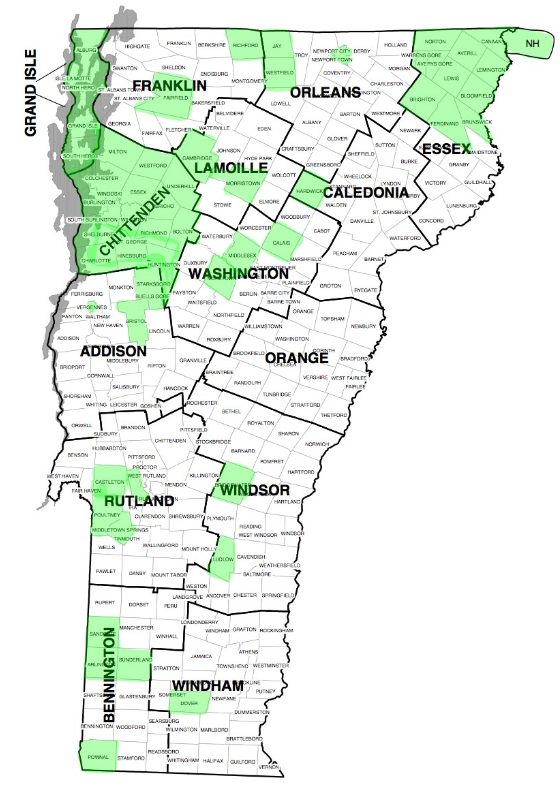
– Arlington
– Averill
– Avery’s Gore
– Bloomfield
– Bolton
– Bridgewater*
– Brighton/Village of Island Pond
– Bristol
– Brunswick
– Buells Gore
– Burlington
– Calais*
– Cambridge
– Canaan/Village of Beecher Falls
– Castleton*
– Charlotte
– Colchester
– Dover*
– Essex Junction Village
– Essex Town
– Fairfield*
– Ferdinand
– Grand Isle
– Hardwick*
– Hinesburg
– Huntington
– Isle La Motte
– Jay*
– Jericho
– Lemington
– Lewis
– Ludlow
– Middlesex
– Middletown Springs*
– Milton
– Moretown*
– Morristown*
– Newport City
– North Hero
– Norton
– Poultney
– Pownal
– Richford*
– Richmond
– Sandgate
– Shelburne
– South Burlington
– South Hero
– St. George
– Starksboro
– Stewartstown, NH
– Sunderland
– Underhill
– Vergennes*
– Warner’s Grant
– Warren Gore
– West Rutland
– Westfield*
– Westford
– Williston
– Winooski
* e-Vermont communities newly participating in FPF
#VT’s new Lt. Gov. pushes Civic Engagement
New Vermont Lt. Governor Phil Scott (Rep.) was sworn in yesterday and gave a speech centered on civic engagement. I invite our new Lt. Gov. to see how Front Porch Forum is helping Vermont neighbors connect and get involved locally… e-Vermont too. Some choice quotes…
… as many of you know, 46 percent of registered voters didn’t vote in November. That’s 209,000 Vermonters whose only choice on November 2 was not to show up. They decided it wasn’t worth it, or it didn’t matter, or it wouldn’t do any good, to make their voice heard. My experience shows that’s just not the case… I don’t think any of us fully realized until November 2 what that frustration had turned into; it turned into 209,000 people who had apparently given up… Civic involvement isn’t something that’s only relevant on even-numbered years.
All of us here in the Legislature need to reach out to those folks and welcome them in, even when we might not agree with their views. We need to open our doors. In order to live up to the intentions and the expectations of our accessible government, we ourselves need to be more accessible. That will mean different things for each of us. For me, that means literally opening my office door downstairs a morning or two a week and inviting you in for coffee and conversation. It means opening my virtual doors…
When I challenge Vermonters to get involved, I’m not just talking about the work we do in Montpelier. Because I really believe we all want to help each other; sometimes we just need to know how… one theme that I’ve stressed… is self-reliance, and its partner, volunteerism. In my mind, those are two sides of the same coin. Being self-reliant doesn’t just mean looking after yourself, although that’s important… But self-reliance also means looking after our neighbors, and giving them the support they may need to get to the next step in their lives.
That has a lot of implications.
- That means buying local, and supporting the merchants on Main Street instead of the website in California.
- That means helping Vermont’s manufacturers to identify suppliers and trading partners who are here within our borders or close by in our region.
- That means making it easier and more affordable for more of us to eat local food, supporting our farmers, reducing transportation costs, and getting fresher and healthier things to eat.
- That means investing in energy policies that help us become more independent.
Personally, I suspect that a great deal of the collective frustration that caused those 209,000 people to stay home on November 2 was the sense that our elected officials and candidates kept talking about the goals — creating jobs, jump-starting the economy, and helping our most vulnerable — but didn’t talk enough about how we would get there. Buying local and encouraging innovative local partnerships are part of my vision for how we do it…
Our challenge in Montpelier is to come up with solutions that will strengthen Vermont. Your challenge is to come up with solutions that will help your neighbor and strengthen your community. If we all work together, we will strengthen the legacy of the state that we love to call home.
Thou shalt not question Facebook
I’m shocked that John Stewart would cast aspersions on our omniscient corporate overlord. How dare he! It’s imperative that we all march lock-step into Facebook’s warm embrace.
| The Daily Show With Jon Stewart | Mon – Thurs 11p / 10c | |||
| The Anti-Social Network | ||||
|
||||
About Blog
Ghost of Midnight is an online journal about fostering community within neighborhoods, with a special focus on Front Porch Forum (FPF). My wife, Valerie, and I founded FPF in 2006... read more
Post Categories
- Uncategorized
- PDF2009
- Calendar
- podcast
- Northeast Kingdom
- Peer Rental
- Big Tech
- Localization
- Events
- Google AdSense
- Web Traffic
- PDF2007
- Elections
- Pay It Forward
- berkmansunlight
- Maps
- Video
- Upstate New York
- Mobile
- Coupons
- Wildlife
- Raffle
- Viral Marketing
- Donations
- Crisis Response
- Lost & Found
- Gratitude
- College Students
- Real Estate
- Social Responsibility
- Orton Family Foundation
- Start ups
- Make It Your Own Awards
- Online Civility
- Clay Shirky
- Newspapers
- Humor
- How To Use FPF
- Online Classified Ads
- Peer Reviews
- Politics
- Community Management
- Best of FPF
- Economic Development
- Local Reviews
- Case Foundation
- Borrow and Lend
- Neighborhood Watch
- Good Government
- Small Business Advertising
- Citizen Journalism
- e-Vermont
- Democracy
- Local Search
- Knight Foundation
- Burlington
- MacArthur Fellows
- Civic Engagement
- Social Media
- social capital
- Social Networking
- Vermont
- Neighborhood
- Community Building
- Local Online
- Front Porch Forum