Category Archives: Facebook
Another case where email trumps social media
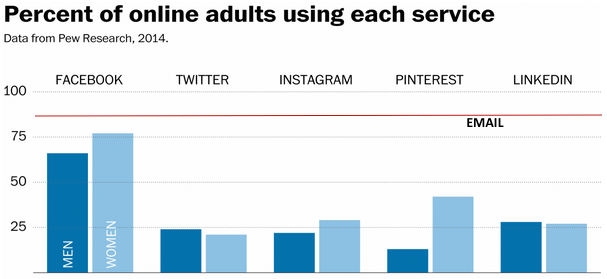
The Washington Post reported recently that email still trumps social media in political campaigning… “and it’s not close.”
Online harassment survey results
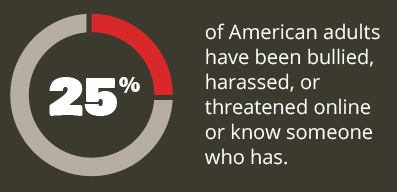
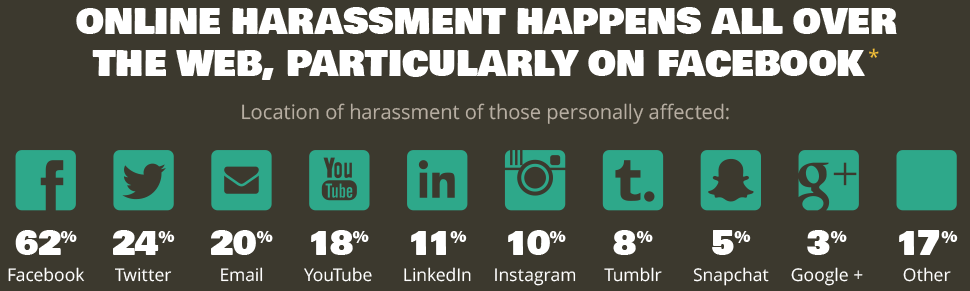
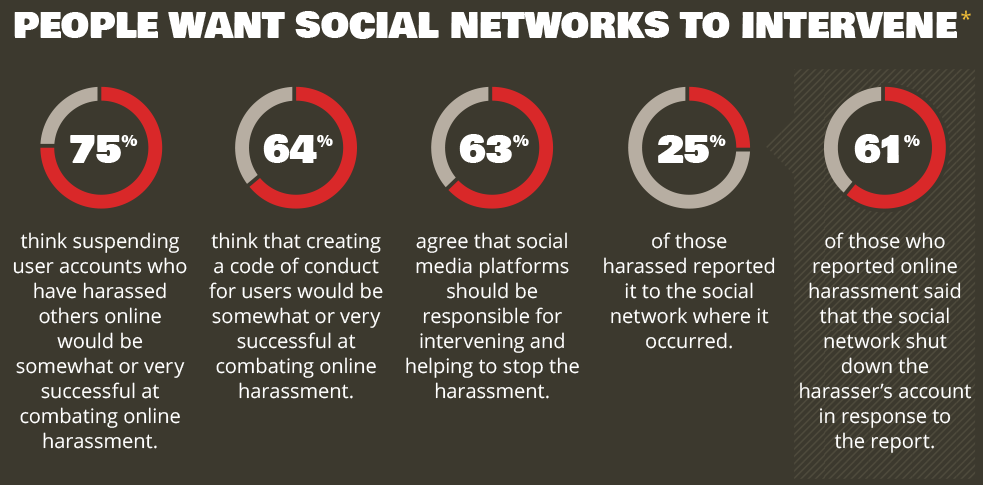
Craig Newmark, of craigslist fame, recently released an infographic highlighting the results of a survey about online harassment. Some points from the survey:
VPR Commentary: Online Networking
 Hear, hear, Helen! Take a listen to Helen Labun Jordan’s Vermont Public Radio Commentary broadcast today…
“Skepticism about ‘online community’?”
From Harvard’s Social Capital Blog…
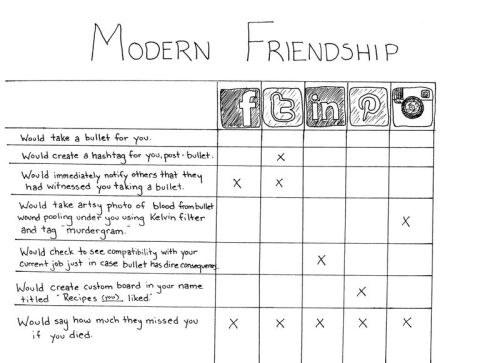
NYTimes: “Facebook… a major waste of time”
From today’s New York Times…
Facebook is the most popular social network in America roughly two-thirds of adults in the country use it on a regular basis.
But that doesn’t mean they don’t get sick of it.
A new study released on Tuesday by the Pew Research Center”˜s Internet and American Life Project found that 61 percent of current Facebook users admitted that they had voluntarily taken breaks from the site, for as many as several weeks at a time.
The main reason for their social media sabbaticals?
Not having enough time to dedicate to pruning their profiles, an overall decrease in their interest in the site as well as the general sentiment that Facebook was a major waste of time. About 4 percent cited privacy and security concerns as contributing to their departure. Although those users eventually resumed their regular activity, another 20 percent of Facebook users admitted to deleting their accounts.
Of course, even as some Facebook users pull back on their daily consumption of the service, the vast majority 92 percent of all social network users still maintain a profile on the site. But while more than than half said that the site was just as important to them as it was a year ago, only 12 percent said the site’s significance increased over the last year indicating the makings of a much larger social media burnout across the site.
The study teases out other interesting insights, including the finding that young users are spending less time overall on the site…
Lee Rainie, the director of the Pew Research Center’s Internet & American Life Project, which conducted the survey, described the results as a kind of “social reckoning.”
“These data show that people are trying to make new calibrations in their life to accommodate new social tools,” said Mr. Rainie, in an e-mail. Facebook users are beginning to ask themselves, “ “˜What are my friends doing and thinking and how much does that matter to me?,’ “ he said. “They are adding up the pluses and minuses on a kind of networking balance sheet and they are trying to figure out how much they get out of connectivity vs. how much they put into it.”
Social media — the new graffiti?
Graffiti was traditionally the only means love or hate-filled teenagers had of letting the world know about their passions.
Now, thanks to Twitter and Facebook, they can literally let the world know about it – and no-one will come along and remove it.
“Vandalising and spraying – the local council will just come and take it off,” says Kito, a youth worker of the Queen’s Crescent Youth Club. “They will wash it off. So you put it up, they wash it off, you put it up.
But if you put it up on your BlackBerry it’s yours, it’s your personal message and nobody bothers you.”
Vandalism is increasingly seen as a pointless activity. As one teenage girl at the Queen’s Crescent Youth Club put it: “If I get angry about something, I go on Facebook.”
Connected neighbors to the rescue!
#BTV #VT – We have our loaner dog Toby back thanks to FPF and the the watchful eye of FPF’er Ryan. Thanks again Ryan. A much happier Christmas is on the way now.
We tried three things to find our missing dog: the manual posting of dozens of LOST DOG signs around town; implementing my wife’s substantial Facebook network; and a simple yet desperate posting on FPF. Front Porch Forum came through again! So grateful to have this. Thank you for this wonderful, effective community resource!
Facebook vs. Housework? Foursquare on the Ropes?
#VT – Not everyone is rosy about all social media. First, from Information Week…
A recent study from The University of Canterbury at New Zealand shows… What was a bit surprising was how Facebook fared: It placed 29th out of 30 daily behaviors that study participants were asked to rank. In fact, it would seem, the only thing that makes people happy less than Facebook is recovering from illness. Facebook ranked 28th in engagement and 24th in pleasure. It ranked dead last in meaning…
Ranking higher than Facebook on the happiness, meaning and engagement meter were housework, studying, and paid work… I’m not a huge housework fan, but when it comes to happiness, meaning and engagement, I get more out of housework than I get from Facebook. After I clean the kitchen, for example, I am happy with how nice it looks. There’s meaning in what I did: My family has clean dishes and a clean workspace. We don’t worry about food poisoning… I think the point is that activities with purpose give us happiness, meaning and a sense of engagement — and Facebook all too often seems to serve none of these areas. That should worry businesses who hope to use Facebook to their benefit.
Here’s a prediction: Foursquare will be the next highly-funded casualty in the social media sphere… Rather than be disruptive, Foursquare is being dysfunctional. The company is trying desperately to follow industry leaders instead of leading an industry. They are stuck in social media no man’s land.Foursquare was founded in 2009 as a local “check-in” service. To-date, the company has raised more than $70 million (the last funding valued the company at $600 million). In 2010, Facebook, Google and Yelp added their own version of Foursquare’s most compelling feature ““ the check-in. This summer, after getting crushed for two years by competitors, Foursquare decided to finally de-emphasize check-in and the game it had created around becoming “mayor” of a location. Only geeks with dreams of being the Michael Bloomberg of the Soho Starbucks were playing…Don’t get me wrong; checking in is useful on a user’s primary social platform if they don’t mind the privacy implications. Many people want to let friends know where they are or brag about being at a cool event. But like the GPS was to TomTom, the “check-in” is to Foursquare. It was their one trick. Satellite navigation went into both cars and phones ““ bruising TomTom. Similarly the check-in was built into Facebook, Yelp, Google and Trip Advisor. Will it be the death of Foursquare’s pony? By the time Foursquare realized they were becoming irrelevant, it was too late. I estimate that the company has cash for 12 more months of operation with its current 150 employees. There may still be time for a fix.
State of the Re:Union looks at online communities
 #BTV #VT – This NPR show weaves together several stories about online communities… lots of food for thought, including a segment about Front Porch Forum (for FPF’s part, go to the 5th section (Segment B) and start at the 7:00 minute mark).
Emergent Media for Social Entrepreneurs and Nonprofits in Waitsfield #VT July 12
New/Digital Emergent Media for Social Entrepreneurism and Nonprofits
HigherMind Mediaworks to host free July NetsquaredVermont Event
@ Quench ArtSpace in Waitsfield on Thursday, July 12 from 7:00 – 9:00 pm
Curious about Front Porch Forum? Yakking on YouTube? Friending on Facebook? Tweeting on Twitter? All Mad River Valley residents interested in new digital media platforms and how they can be harnessed for effective social entrepreneurism and nonprofit work are invited to a FREE public forum bringing together some of Vermont’s most forward-thinking nonprofit leaders and social entrepreneurs using new/digital emergent media for positive social change.
Our July 12 @Netsquared guest panelist presenters include:
• Lauren Glenn-Davitian and Eli Harrington, who spearheads CommonGoodVT, a Burlington-based organization dedicated to supporting the Vermont nonprofit community. Connect @ www.commongoodvt.org.
• Michael Wood-Lewis, the co-founder of Front Porch Forum, a free community-building service helping neighbors connect, now being used in dozens of towns around Vermont. Network @ frontporchforum.com.
• Sandy Tarburton, Membership and Communications Director for the Northern Forest Canoe Trail. Paddle @ www.northernforestcanoetrail.org.
• Amanda Levinson, pioneering organizer of @Netsquared in Vermont, who founded the Burlington @Netsquared chapter this past winter. Get squared @ www.netsquared.org.
Extra bonuses? Free food, drink, contemporary art, and the crowd sourced wisdom of your friends and neighbors!
Thanks to our food co-sponsor Liz Lovely Cookies of Waitsfield.
See you @ Quench ArtSpace in Waitsfield on Thursday, July 12 @ 7:00 pm. [Thanks to Rob Williams for sharing this announcement and for organizing!]
About Blog
Ghost of Midnight is an online journal about fostering community within neighborhoods, with a special focus on Front Porch Forum (FPF). My wife, Valerie, and I founded FPF in 2006... read more
Post Categories
- Uncategorized
- PDF2009
- Calendar
- Northeast Kingdom
- podcast
- Big Tech
- Peer Rental
- Events
- Localization
- PDF2007
- Web Traffic
- Google AdSense
- Pay It Forward
- Elections
- berkmansunlight
- Maps
- Video
- Coupons
- Wildlife
- Upstate New York
- Mobile
- Viral Marketing
- Raffle
- Crisis Response
- Donations
- Lost & Found
- Gratitude
- Real Estate
- College Students
- Social Responsibility
- Orton Family Foundation
- Start ups
- Make It Your Own Awards
- Online Civility
- Clay Shirky
- Newspapers
- How To Use FPF
- Humor
- Online Classified Ads
- Peer Reviews
- Politics
- Community Management
- Economic Development
- Local Reviews
- Case Foundation
- Borrow and Lend
- Neighborhood Watch
- Good Government
- Small Business Advertising
- Citizen Journalism
- e-Vermont
- Democracy
- Local Search
- Knight Foundation
- Burlington
- MacArthur Fellows
- Civic Engagement
- Social Media
- social capital
- Social Networking
- Vermont
- Neighborhood
- Community Building
- Local Online
- Front Porch Forum