Category Archives: Start ups
Do You Value Your FPF? Become A Supporting Member!
 #BTV #VT – We’re working hard to improve and expand Front Porch Forum in 2012-13 and we need your help to make it all happen. Please become a supporting member today and help us reach our annual goal of raising $40,000 by October 31! Contribute here:
http://frontporchforum.com/supporting-members
Every year, members like you help fuel FPF so that we can continue to help neighbors connect and build community. More than 40,000 Vermont households have joined and shared hundreds of thousands of postings with their neighbors through FPF!
Whether it’s group yard sales, car break-ins, sharing perennials, flood recovery efforts, election debates, block parties, plumber recommendations, lost dogs, town notices, or other topics, our small band of committed staff work day and night to keep this all going.
If you enjoy and value Front Porch Forum, please become a supporting member today at:
http://frontporchforum.com/supporting-members
Your contribution is critical to keeping FPF going strong — and will be enormously appreciated. We look forward to serving you and your neighbors in the coming year.
Your FPF team,
Michael, Nina, Linda, Lynn, Gisele, Suzie, and Jan
P.S. We also accept checks, payable to…
Front Porch Forum
PO Box 64781
Burlington, VT 05406-4781
802-540-0069
FPF is not a charity and contributions are not tax deductible. Ad sales to Vermont businesses cover part of our expenses, and your annual supporting-member contributions help close the gap.
FPF is hiring: Seeking ad sales reps.
 #BTV #VT – Front Porch Forum is growing. Join our exciting start-up: http://bit.ly/FPFsalesopening
40,000 Vermonters can’t be wrong
#BTV #VT – Front Porch Forum now has 40,000 members out of its 110,000-household area in Vermont.

Burlington Ruby Conference July 28-29
 #BTV #VT – Vermont’s emerging web application development community will gather at Main Street Landing in Burlington to hear from top developers across North America, including engineers from Twitter and several leading dev. shops. All are welcome. Register today: http://bit.ly/BURUCO
Front Porch Forum, Main Street Landing, Engine Yard, Intridea, and Agilion Apps are sponsors.
Mad River Valley lands their own FPF!
 #VT – We’re so pleased to bring Front Porch Forum to the Mad River Valley. Now, anyone in Waitsfield, Warren, Fayston, Moretown and Duxbury may sign up for FPF at FrontPorchForum.com. Well… Waterbury, Middlesex and about 70 other Vermont towns too (here’s the full list!).
Thanks to the Mad River Valley Planning District, Town of Warren, New England Grassroots Environment Fund, and others for making this possible!
Do tech start-ups belong in Vermont?
#BTV #VT – Sometimes we get this question from out-of-state folks who think all tech start-ups should be born in Silicon Valley. Well, Burlington and Vermont have been great to Front Porch Forum.
And we’re not alone. CNN today reported that the Kauffman Index ranks Vermont the 8th most entrepreneurial state, and the top state east of the Mississippi River. And Richard Florida’s latest research puts Burlington 11th on a new Technology Index of U.S. metro areas.


I’ll take it one step finer… from state, to city, to neighborhood. Our Five Sisters neighborhood in Burlington’s South End boasts several tech start-ups, including
Thanks to Fresh Tracks Capital and Vermont Business Magazine for some of this information.
KillerStartups covers Vermont’s own FPF
 #BTV #VT – Burlington-writer-made-good, Emma McGowan, covered Front Porch Forum for KillerStartups this week.
Help FPF land $250,000 grant!

#BTV #VT – Update 3: Click to vote, enter “Front Porch Forum” in the business name field, AND leave city and state fields BLANK. Click SEARCH button. Then, next to FPF entry, click VOTE button. That’s it! Thank you!
Vermonters, Front Porch Forum members and friends… we need your clicks today. It only takes a minute! We’re in the running for a $250,000 grant that we’ll use to improve the FPF software, add more neighbors and features, and expand to serve more local communities. Will you help? As a small Vermont business, far from Silicon Valley and other capitals of commerce, we’re a long shot but we’ve seen FPF members move mountains before. FPF serves 70 Vermont towns and 1 in upstate New York… 38,000 households participate in this free community service. Let’s see how many votes we can muster! The more votes, the better. 1. Vote for FPF today.
- You must have a Facebook account.
- Go to the contest website and click LOG IN & SUPPORT.
- Enter your Facebook information as needed and click Log In.*
- Once logged in successfully, enter “Front Porch Forum” in the Business Name box (do NOT enter state or city info) and click the SEARCH button. Or search by state.
- When you find the Front Porch Forum entry, click the blue VOTE button next to FPF… that’s it!
- While you’re at it, consider voting for other cool small businesses that you support (you can vote once for as many entrants as you like).
- Voting closed June 30, 2012.
2. Ask your friends to vote for FPF before June 30, 2012.
- Spread the word via FPF, Facebook, Twitter, email, etc.
- Send folks to this blog post for details (http://bit.ly/FPFgrant) or directly to the contest site (http://www.missionsmallbusiness.com).
Wish you success. We LOVE FPF. It is the best mediumm for getting items of interest to the community.
– Barb, Alburgh FPF
- YES, to vote you must have a Facebook account and use it to register with the contest website.
- Once registered on the contest website, enter “Front Porch Forum” into the BUSINESS NAME field and leave the city and state fields untouched/blank… click the SEARCH button. Then click the VOTE button next to the Front Porch Forum entry.
*More details regarding voting… If you are logged into Facebook on your computer:
- When you click to “Support Small Business“, you will be logged into the Mission: Small Businessâ„ site via Facebook Connect
- A permissions screen from Facebook will appear
- The Mission: Small Businessâ„ site will utilize your Facebook credentials for sharing your actions on the site to the Facebook newsfeed
- No information will be posted automatically but you will have the option to share in your Newsfeed your Support, and your Vote on a local merchant
If you are not logged into Facebook:
- When you click to “Support Small Business“, the Mission: Small Businessâ„ site will prompt you to log into Facebook
- Once you log in with your Facebook credentials, you will see a permissions screen from Facebook.
- The Mission: Small Businessâ„ site will utilize your Facebook credentials for sharing your actions on the site to the Facebook newsfeed
- No information will be posted automatically but you will have the option to share in your Newsfeed your Support, and your Vote on a local merchant
How long does it take for a new FPF to take hold?
 #VT – In it’s first week, the Hyde Park Front Porch Forum attracted 100 members… a strong start for a town with 1,200 households.
And 25% of the households in East Montpelier are on board their FPF already, just three months after launch. And they’re putting it to great use. Here’s a note posted by Barbara today…
Hurrah for Front Porch Forum and the generous people of East Montpelier! Saturday we asked for a wheelchair and intercom and today we have both! We had four offers of wheelchairs and two offers of intercoms. Thank you all.
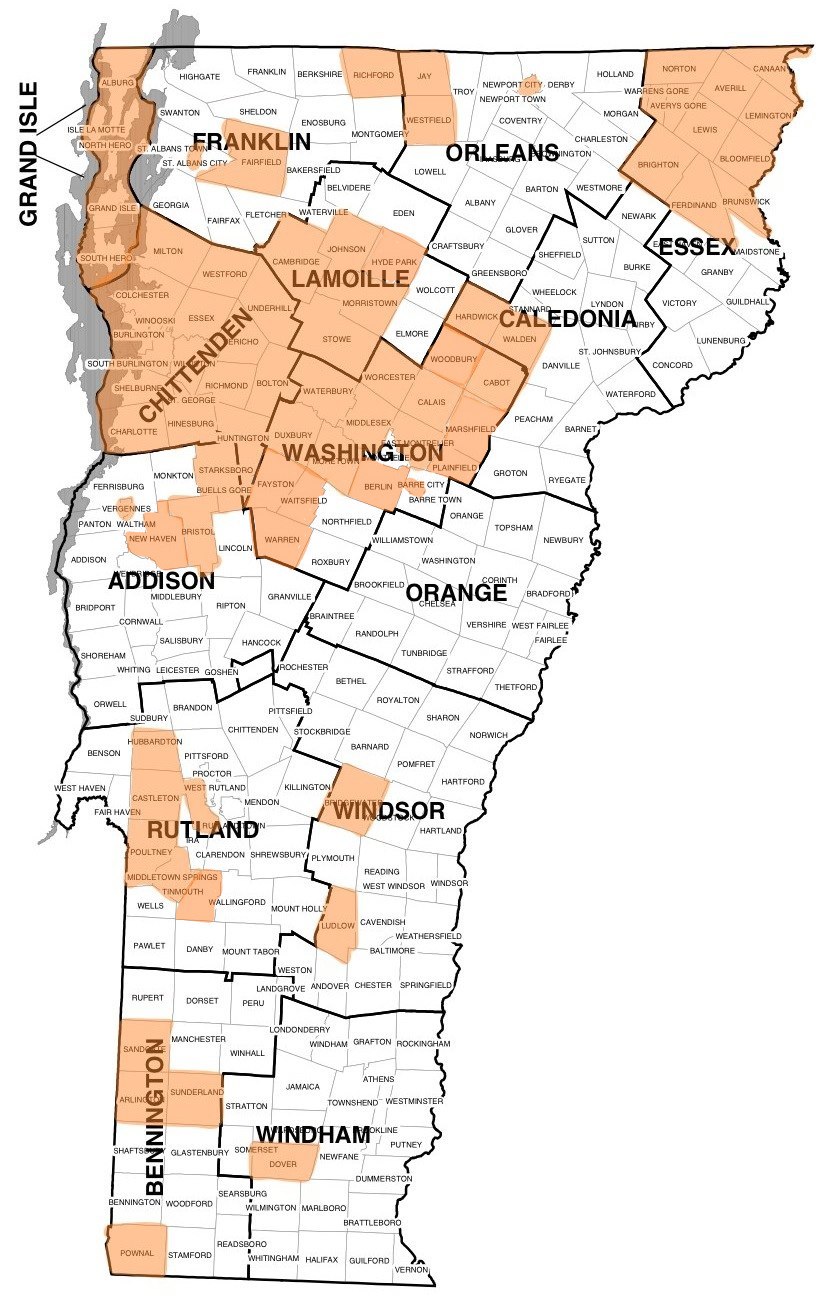
If you’d like to bring FPF to your town in Vermont, please enter your information on our home page, or contact Michael Wood-Lewis. (Here’s a map and list of our current coverage area.)
Hyde Park launches their Front Porch Forum
 #VT – The Town and Village of Hyde Park, Vt., and several local co-sponsors pulled together to bring Front Porch Forum to their community. The official launch is tomorrow, March 19, 2012. Special thanks to…
• Town of Hyde Park
• Village of Hyde Park
• Hyde Park Community Community Circle
• Polow, Polow & Mahoney
• Carolyn Smiles
Front Porch Forum is now available in more than 70 Vermont towns (and one each in New York and New Hampshire!). Please send folks to FPF to sign up!
About Blog
Ghost of Midnight is an online journal about fostering community within neighborhoods, with a special focus on Front Porch Forum (FPF). My wife, Valerie, and I founded FPF in 2006... read more
Post Categories
- Uncategorized
- PDF2009
- Calendar
- Northeast Kingdom
- podcast
- Big Tech
- Peer Rental
- Events
- Localization
- PDF2007
- Web Traffic
- Google AdSense
- Pay It Forward
- Elections
- berkmansunlight
- Maps
- Video
- Coupons
- Wildlife
- Mobile
- Upstate New York
- Viral Marketing
- Raffle
- Crisis Response
- Donations
- Lost & Found
- Real Estate
- College Students
- Gratitude
- Social Responsibility
- Orton Family Foundation
- Start ups
- Make It Your Own Awards
- Online Civility
- Clay Shirky
- Newspapers
- How To Use FPF
- Humor
- Online Classified Ads
- Peer Reviews
- Politics
- Community Management
- Economic Development
- Local Reviews
- Case Foundation
- Borrow and Lend
- Neighborhood Watch
- Good Government
- Small Business Advertising
- Citizen Journalism
- e-Vermont
- Democracy
- Local Search
- Knight Foundation
- Burlington
- MacArthur Fellows
- Social Media
- Civic Engagement
- social capital
- Social Networking
- Vermont
- Neighborhood
- Community Building
- Local Online
- Front Porch Forum